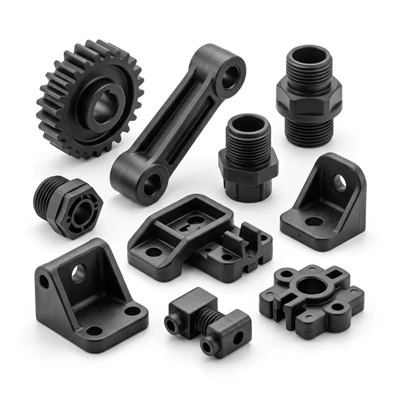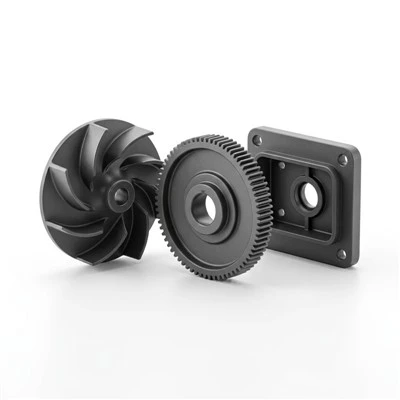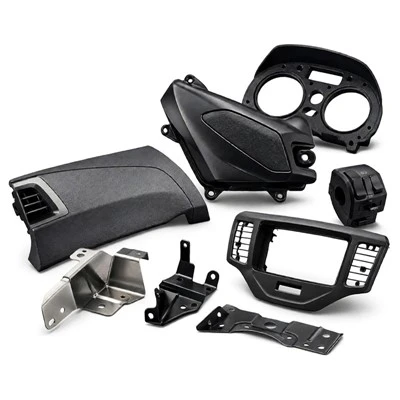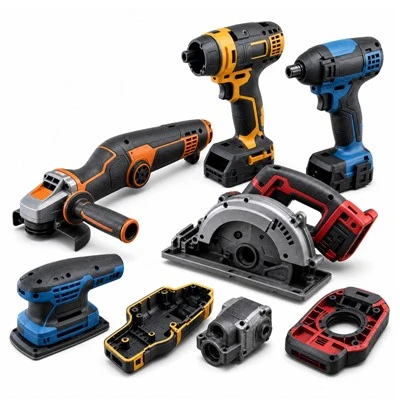

When designing injection-molded parts, engineers often focus exclusively on external aesthetics, overlooking the flow characteristics of molten plastic and the principles of cooling-induced shrinkage. An ill-conceived design not only leads to exorbitant mold-modification costs after the mold has been fabricated but can also result in the scrapping of entire production batches. At its core, injection-molded part design is about ensuring that the plastic can fill the mold cavity "comfortably" and shrink in a stable, uniform manner.
I. Wall Thickness Control: Uniformity is Key; Abrupt Changes Must Be Avoided
The most fundamental principle in injection-molded part design is maintaining uniform wall thickness. As plastic cools, it undergoes volumetric shrinkage. If a section is significantly thicker than the surrounding areas, it will cool more slowly, generating substantial internal stress. This stress differential typically leads to two issues: visible surface depressions (sink marks) and warping or deformation - either upon ejection from the mold or during subsequent use.
In practice, the wall thickness across the main body of the part should remain consistent. If structural requirements necessitate a localized increase in thickness, it is better to use recessed features or strategic depressions rather than simply adding more material. For standard engineering plastics, wall thickness is typically kept between 2.0 mm and 3.0 mm; walls that are too thin may result in incomplete filling, while walls that are too thick exacerbate sink marks and lead to unnecessary material waste. Furthermore, avoid abrupt changes in wall thickness - where the thickness shifts by more than 30%-on any single surface. Incorporating smooth, radiused transitions (R-fillets) can effectively mitigate stress concentration.
II. Ejection Features: Managing Draft Angles and Undercuts
Removing an injection-molded part from its mold requires overcoming both friction and vacuum suction. Consequently, all surfaces oriented perpendicular to the mold-opening direction must incorporate a "draft angle." Without this taper, the part may become "stuck" in the mold; attempting to force it out can easily cause surface scuffing or even structural fracture. Generally, softer materials like PP and PE require larger draft angles (approximately 1°–1.5°), whereas harder materials such as ABS and PC can accommodate smaller angles (approximately 0.5°–1°). Regarding "undercuts" - features that prevent a part from being removed directly along the mold-opening direction - a common mistake among beginners is to incorporate complex undercuts into a design. This necessitates the addition of costly mechanisms, such as slides or lifters, to the mold. Unless structurally essential, undercuts should be eliminated - either by adjusting the parting line or by leveraging material elasticity (e.g., through snap-fit designs). If an undercut must be retained, its impact on mold lifespan and cost should be evaluated early, and sufficient space must be allocated during the structural design phase to accommodate the necessary mechanical components.
III. Rib Layout: Enhancing Rigidity Without Increasing Wall Thickness
When a part needs to withstand loads, simply increasing its wall thickness is an inefficient approach, as it exponentially raises both cooling time and material costs. The better solution is to incorporate ribs. However, rib design requires careful consideration: the thickness of a rib should generally be 50%–60% of the main wall thickness; exceeding this range often leads to visible sink marks on the opposite surface. Furthermore, a sufficiently large radius (typically >0.5 mm) must be applied where the rib connects to the main wall to improve melt flow and reduce the risk of stress-induced cracking.
In practice, ribs should be oriented parallel to the direction of plastic flow to ensure optimal mold filling. Additionally, one should avoid adding purely decorative protrusions to non-load-bearing surfaces; such unnecessary features only complicate the mold design and make the part more difficult to clean.