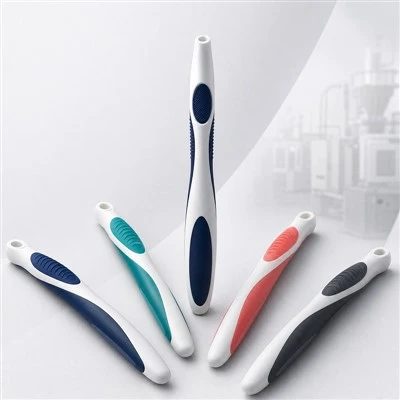

The plastic injection molding process primarily consists of the following steps:
1) Raw material pretreatment, which typically involves drying to keep the moisture content below 0.1%;
2) Melting and plasticization, with temperatures ranging from 160°C to 300°C, depending on the material;
3) Injection and mold filling, with injection pressures generally between 70 MPa and 150 MPa;
4) Holding pressure and cooling, where the holding time varies from 5 to 30 seconds based on the thickness of the product;
5) Mold opening and ejection, with the mold temperature typically maintained between 20°C and 80°C.
The advantages of injection molding include:
1) High production efficiency, enabling automated, large-scale manufacturing;
2) High dimensional accuracy and excellent surface quality of the finished products;
3) The ability to form complex shapes; 4) High material utilization with minimal waste.
However, there are also some drawbacks:
1) High mold costs;
2) Unsuitability for small-batch production;
3) Strict requirements regarding the flowability of the raw materials.