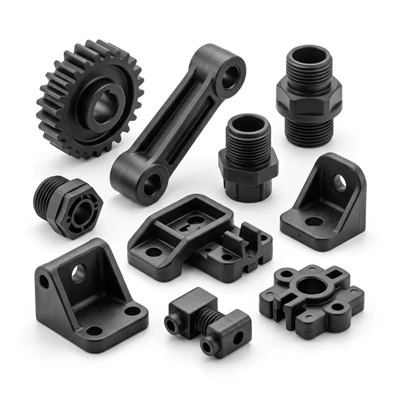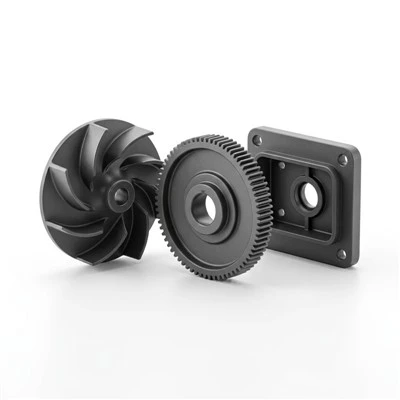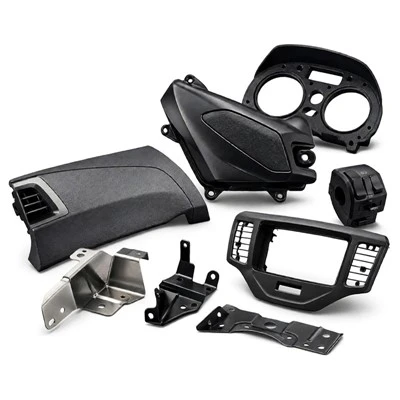

Precision metal stamping offers numerous benefits to both manufacturers and end-users, including:
① High-Volume Production
Precision metal stamping can produce anywhere from thousands to millions of parts in a single run. This offers higher productivity compared to other metalworking processes, such as CNC machining, fabrication, or welding.
The process is ideally suited for high-volume manufacturing, where large quantities of metal components are required.
② Uniformity
Precision metal stamping is highly versatile; the same tooling can be used to produce a wide variety of components with minimal need for additional setup or adjustments between production runs.
Consequently, precision metal stamping delivers superior uniformity compared to many other industrial processes. Because all products are stamped from sheet metal, they share consistent wall thickness and nearly identical surface finishes, which simplifies post-production assembly and quality control inspections.
Furthermore, precision metal stamping supports mass customization through automated, variable design capabilities, allowing for the rapid fulfillment of unique customer requirements.
③ Quality
Precision metal stamping is a versatile process capable of producing a range of components with varying surface finishes and tolerances.
It can also create parts featuring thin walls, deep-drawn sections, and undercuts-geometries that would be challenging to achieve using other methods like CNC machining or fabrication.
This makes precision metal stamping an excellent choice for sectors such as aerospace, medical implants, automotive, lighting, and consumer electronics, where precise shapes and thin-walled components are essential.
It is one of the few technologies capable of producing the specific thin-walled geometries required for demanding electronic packaging applications, thanks to its ability to create deep-drawn features.
④ Ease of Use
Engineers and designers find precision metal stamping highly accessible, as it allows for the creation of complex shapes with minimal tooling changes.
This flexibility grants customers greater design freedom, facilitating conceptual exploration during the early stages of product development.
It also helps reduce costs by minimizing material waste, as fewer die changes are required for each new iteration of a part design. Precision metal stamping facilitates the production of precisely engineered components by reducing the need for secondary processing throughout the manufacturing cycle. This results in a more efficient workflow, particularly when dealing with high production volumes.
⑤ Minimizing Material Waste
Precision metal stamping is an economical manufacturing process, as it utilizes the absolute minimum amount of material required to produce a part.
This capability enables manufacturers to create thin-walled products without the need for complex secondary operations-such as CNC machining-which can be both time-consuming and costly.
⑥ Cost-Effectiveness
Compared to the large-scale die-casting machinery used for mass production, precision metal stamping entails lower startup costs. Consequently, it is highly advantageous for production runs that, while substantial in volume, may not require massive-scale industrial infrastructure.
It also offers a high degree of flexibility, allowing manufacturers to leverage design options to accommodate custom client projects that might otherwise be impossible to produce. This translates to higher profit margins without the need for significant initial investment.
⑦ Minimal Secondary Operations
With precision metal stamping, secondary operations-such as post-production thread cutting-are generally unnecessary. The process creates accurate, well-defined features-including pre-drilled holes, countersinks, or threads-in a single operation. Since secondary processing typically increases both costs and time-to-market, the minimal need for manual finishing after the stamping process saves both time and money.